Comprehensive annotation tools for image, video, point cloud, and sensor data, the foundation for training perception models.
Multimodal Annotation
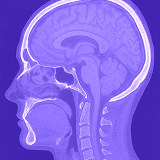
Image, video, LiDAR, radar, IMU, GPS, and audio, annotated in one platform
2D/3D Labeling
Bounding boxes, polygons, and point cloud annotation across 2D and 3D data.
Segmentation
Semantic and instance segmentation for scene and object-level understanding.
Keypoint & Pose Annotation
Keypoint and pose estimation for both human and robot subjects.
Path & Depth Annotation
Lane, road, and path annotation, plus depth and occupancy labeling.
Tracking & Events
Object tracking across frames, plus event, action, and scene classification.
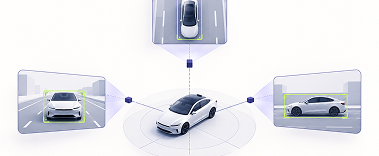
Sensor Fusion for a Unified View of the Physical World
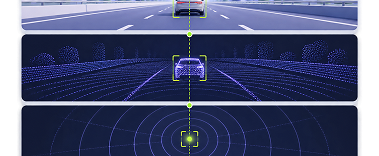
Synchronize and annotate data from multiple sensors like cameras, LiDAR, radar, for sensor fusion that gives perception models one consistent read on the environment.
Synchronized Multi-Sensor Annotation
Cameras, LiDAR, radar, and other sensors annotated in alignment, not in isolation.
Time-Series Sync
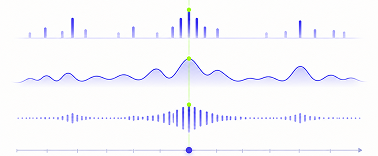
Sensor streams aligned in time, not just in space.
Calibration & Multi-View
Calibration visualization, multi-view annotation, and sensor overlay/alignment tools.
Built for How Robots Actually Move and Act
Annotation tooling tailored to navigation, manipulation, localization, and human-robot interaction.
SLAM & Localization
Support for SLAM and localization workflows.
Trajectory & Pose
Trajectory, path, and robot pose labeling.
Manipulation & Grasp
Manipulation and grasp-point annotation.
Obstacle & Navigation
Obstacle, free-space, and navigation-map annotation.
Human-Robot Interaction & Dynamic Behavior
Human-robot interaction labeling and dynamic object behavior annotation, for systems that share space with people.
The complete execution layer for training your Physical AI models
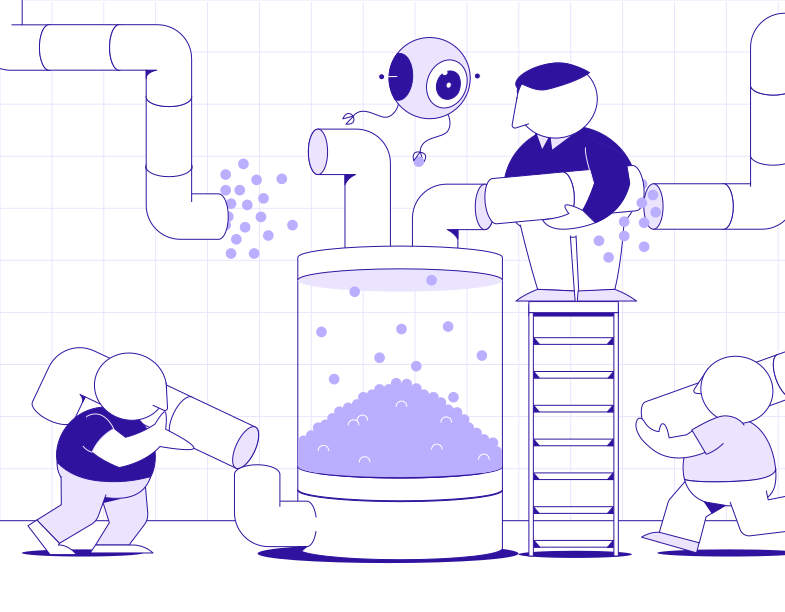
Taskmonk's operating model for high-quality AI data, applied to a category where the margin for error is physical, not just statistical.
What is "Physical AI" in the context of data annotation?
Physical AI refers to AI systems like robots, autonomous vehicles, drones, and other embodied agents, that perceive, reason, and act in the real world. Training these systems requires multimodal, sensor-synchronized datasets (image, video, LiDAR, radar, IMU, GPS, audio) rather than the single-modality data most annotation platforms are built for.
What sensor types can Taskmonk annotate for Physical AI projects?
Image, video, LiDAR, radar, IMU, GPS, and audio, annotated across 2D and 3D data in one platform, with support for bounding boxes, polygons, point clouds, segmentation, keypoint and pose estimation, and object tracking.
How does Taskmonk handle multi-sensor data that needs to stay in sync?
Through synchronized multi-sensor annotation via cameras, LiDAR, radar, and other sensors are annotated in alignment, not in isolation. This includes time-series synchronization, calibration visualization, and multi-view annotation tools.
Does Taskmonk support robotics-specific annotation needs like navigation and manipulation?
Yes, SLAM and localization support, trajectory and robot pose labeling, manipulation and grasp-point annotation, obstacle and navigation-map annotation, and human-robot interaction labeling for systems that share space with people.
What industries is Taskmonk's Physical AI annotation used for?
How does quality control work for safety-critical Physical AI data?
Every project runs through a structured QC framework: Maker-Checker and Maker-Editor review stages, Consensus scoring, sample generation, and error-proofing, before data reaches your training pipeline.
Is Physical AI data annotation handled differently from standard computer vision annotation?
The core annotation types overlap (bounding boxes, segmentation, keypoints), but Physical AI adds robotics-specific tooling like SLAM, grasp-point, navigation-map, and human-robot interaction annotation plus multi-sensor synchronization, which standard CV workflows don't need.
Where is Physical AI data hosted, and is it enterprise-compliant?
Data connects directly from your own cloud storage rather than being transferred, with dedicated VPC options. Hosting is SOC 2, ISO 27001, and HITRUST compliant.
Get the Data Right Before You Teach a Robot to Act
Multimodal, sensor-synchronized, production-ready datasets for Physical AI teams.
.svg)

.svg)


.svg)
.svg)
.svg)
.svg)
.svg)
.svg)
.svg)


.svg)

.svg)
.svg)
.svg)
.svg)


%20(1).png)
